
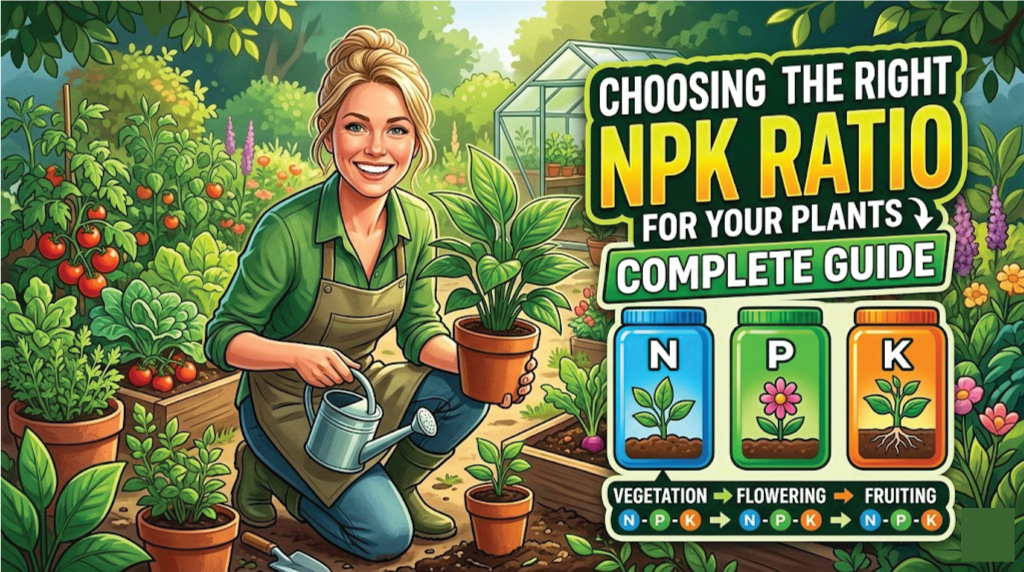
If you’ve ever looked at a fertilizer label and seen numbers like 10-10-10, 5-10-5, or 20-20-20, you might have wondered what those numbers actually mean. These numbers represent the NPK ratio, one of the most important factors in plant nutrition and growth.
Choosing the right NPK ratio is not just about feeding your plants—it’s about giving them exactly what they need at the right time. Whether you’re growing vegetables, flowers, fruit trees, or houseplants, understanding NPK can dramatically improve your results.
In this complete guide, you’ll learn:
- What NPK means and why it matters
- How each nutrient affects plant growth
- How to choose the right ratio for different plants
- Common mistakes to avoid
- Pro tips used by experienced gardeners in the USA
By the end of this guide, you’ll be able to confidently select the perfect fertilizer for any plant.
What is NPK?
NPK stands for three essential nutrients:
- N = Nitrogen
- P = Phosphorus
- K = Potassium
These are called macronutrients, meaning plants need them in large amounts.
What Do the Numbers Mean?
A fertilizer labeled 10-10-10 means:
- 10% Nitrogen
- 10% Phosphorus
- 10% Potassium
The remaining 70% is made up of fillers or other nutrients.
Why NPK is Important for Plants
Plants need nutrients just like humans need food. Without the right balance, plants may:
- Grow slowly
- Produce fewer flowers or fruits
- Develop weak roots
- Become more vulnerable to diseases
Using the correct NPK ratio ensures:
- Faster growth
- Strong root development
- Better flowering and fruiting
- Higher yields
Understanding Each Nutrient in Detail
1. Nitrogen (N) – The Growth Booster
Nitrogen is responsible for:
- Leaf growth
- Green color (chlorophyll production)
- Overall plant size
Signs of Nitrogen Deficiency:
- Yellow leaves (especially older ones)
- Slow growth
- Thin stems
Too Much Nitrogen:
- Excessive leafy growth
- Fewer flowers or fruits
- Weak plants
👉 Best for: Leafy vegetables (lettuce, spinach), grass, herbs
2. Phosphorus (P) – The Root and Flower Developer
Phosphorus helps with:
- Root development
- Flowering
- Fruit production
- Energy transfer within plants
Signs of Phosphorus Deficiency:
- Poor root growth
- Dark or purplish leaves
- Few flowers
Too Much Phosphorus:
- Blocks other nutrients like iron
- Can harm soil health
👉 Best for: Flowering plants, root vegetables, fruiting crops
3. Potassium (K) – The Strength Builder
Potassium supports:
- Disease resistance
- Water regulation
- Strong stems
- Overall plant health
Signs of Potassium Deficiency:
- Brown leaf edges
- Weak stems
- Poor fruit quality
Too Much Potassium:
- Nutrient imbalance
- Reduced magnesium absorption
👉 Best for: All plants, especially fruiting crops
How to Choose the Right NPK Ratio
Choosing the right ratio depends on three main factors:
1. Type of Plant
Different plants need different nutrients.
2. Growth Stage
Plants require different nutrients at different stages.
3. Soil Condition
Your soil may already contain some nutrients.
Best NPK Ratios for Different Plants
🌱 Vegetables
- Leafy vegetables: High Nitrogen (e.g., 10-5-5)
- Root vegetables: High Phosphorus (e.g., 5-10-5)
- Fruiting vegetables: Balanced or higher potassium (e.g., 10-10-10 or 5-10-10)
🍅 Tomatoes
Tomatoes need:
- Early stage: Balanced (10-10-10)
- Flowering stage: Low nitrogen, high phosphorus (5-10-10)
🌸 Flowers
- Flowering plants need more phosphorus
- Ideal ratio: 5-10-5 or 10-20-10
🌿 Houseplants
- Balanced fertilizer works best
- Example: 10-10-10 or 20-20-20
🌳 Trees and Shrubs
- Slow-release fertilizer recommended
- Ratio: 10-10-10 or 12-12-12
🌱 Lawn/Grass
- Needs high nitrogen
- Example: 20-5-10
NPK Based on Growth Stages
🌱 Seedling Stage
- Low fertilizer or mild mix
- Example: 5-5-5
🌿 Vegetative Stage
- High nitrogen
- Example: 10-5-5
🌸 Flowering Stage
- High phosphorus
- Example: 5-10-10
🍎 Fruiting Stage
- Higher potassium
- Example: 4-6-8
Organic vs Synthetic Fertilizers
Organic Fertilizers
- Slow release
- Improve soil health
- Examples: compost, manure
Synthetic Fertilizers
- Fast acting
- Easy to control
- Can harm soil if overused
👉 Best approach: Combine both
How to Read Fertilizer Labels
A label might include:
- NPK ratio
- Application instructions
- Additional nutrients (calcium, magnesium)
Always follow:
- Dosage instructions
- Application frequency
Soil Testing: The Secret to Perfect NPK
Before adding fertilizer, test your soil.
Why Soil Testing Matters:
- Prevents over-fertilization
- Saves money
- Improves plant health
You can:
- Use DIY soil test kits
- Send samples to labs (common in the USA)
Common NPK Mistakes (Avoid These!)
❌ Over-fertilizing
More is not better—can burn plants.
❌ Using the Same Fertilizer for All Plants
Different plants have different needs.
❌ Ignoring Soil Condition
You may already have enough nutrients.
❌ Too Much Nitrogen
Leads to leaves but no fruits.
Pro Tips from Expert Gardeners
💡 Tip 1: Start with Balanced Fertilizer
If unsure, use 10-10-10
💡 Tip 2: Observe Your Plants
Plants “tell” you what they need.
💡 Tip 3: Use Slow-Release Fertilizer
Reduces risk of overfeeding
💡 Tip 4: Fertilize in the Morning
Better absorption
💡 Tip 5: Water After Fertilizing
Prevents root burn
NPK for Container Gardening
Container plants need more frequent feeding because:
- Nutrients wash out quickly
- Limited soil
Use:
- Liquid fertilizer
- Balanced ratio like 10-10-10
Seasonal Fertilizing Guide (USA)
Spring
- High nitrogen for growth
Summer
- Balanced fertilizer
Fall
- Low nitrogen, more potassium
Winter
- Minimal fertilizing
DIY Fertilizer Ideas
Banana Peel Fertilizer
- Rich in potassium
Coffee Grounds
- Good nitrogen source
Eggshells
- Adds calcium
Environmental Impact of Fertilizers
Overuse can:
- Pollute water
- Damage soil
- Harm beneficial microbes
👉 Always use responsibly
Frequently Asked Questions (FAQ)
Q1: What is the best NPK ratio for beginners?
A: Start with 10-10-10
Q2: Can I mix different fertilizers?
A: Yes, but carefully
Q3: How often should I fertilize?
A: Every 2–4 weeks (depends on plant)
Q4: Is organic fertilizer better?
A: It’s safer but slower
Conclusion
Understanding NPK is one of the most powerful skills any gardener can learn. Instead of guessing, you can now make informed decisions based on your plant’s needs.
Remember:
- Nitrogen = Growth
- Phosphorus = Roots & Flowers
- Potassium = Strength
Choosing the right NPK ratio will:
- Increase yields
- Improve plant health
- Save money on fertilizers
Final Tip
Don’t just follow a fixed formula—observe your plants and adjust accordingly. Gardening is both science and art.