
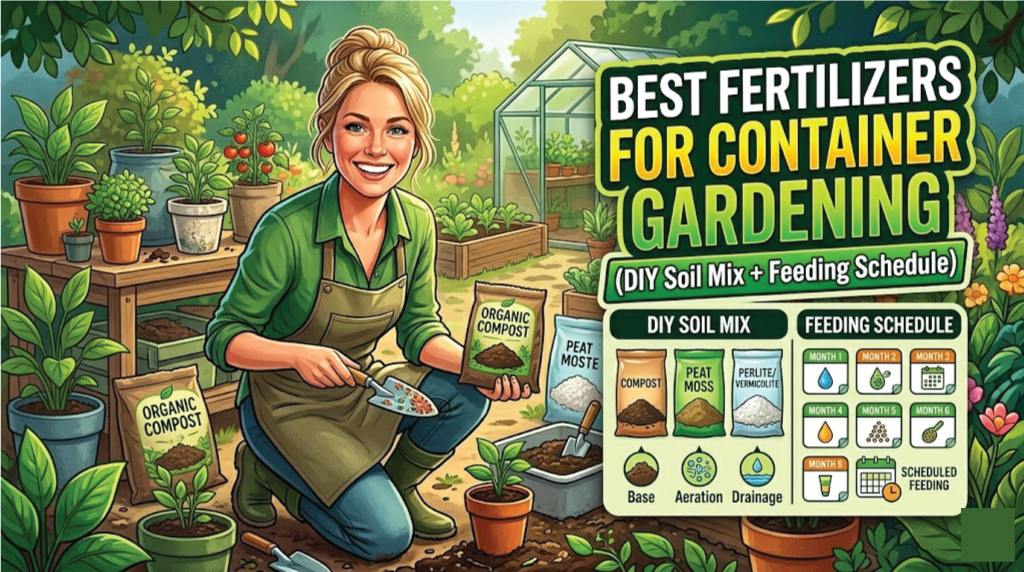
Container gardening has become extremely popular in the United States, especially among urban gardeners, apartment dwellers, and homeowners with limited space. Whether you’re growing vegetables on a balcony, herbs on a windowsill, or flowers on a patio, container gardening offers flexibility and convenience.
However, growing plants in containers is very different from growing them in the ground.
In traditional gardening:
- Roots can expand freely
- Soil naturally contains nutrients
- Microorganisms replenish fertility
But in containers:
- Soil volume is limited
- Nutrients get depleted quickly
- Frequent watering washes nutrients away
Because of this, choosing the right fertilizer and feeding schedule is not optional—it’s essential for success. (Gardening Note)
In this complete guide, you’ll learn:
- Best fertilizers for container gardening
- Organic vs synthetic options
- DIY soil mix recipes (step-by-step)
- Proper feeding schedule
- Expert tips for USA gardeners
Why Container Plants Need Special Fertilizer
Container plants depend entirely on you for nutrients.
Key Challenges:
1. Limited Nutrients
Most potting mixes contain little to no long-term nutrients. (Biology Insights)
2. Nutrient Leaching
Watering frequently washes nutrients out of pots.
3. Restricted Root Space
Roots can’t search for nutrients like in ground soil.
👉 That’s why:
- Regular feeding is required
- Balanced fertilization is critical
- Soil quality matters even more
Understanding Fertilizers for Containers
What Nutrients Do Plants Need?
Plants need three main nutrients:
- Nitrogen (N) → Leaf growth
- Phosphorus (P) → Roots & flowers
- Potassium (K) → Strength & immunity
A balanced fertilizer like 10-10-10 is often recommended for general use. (Biology Insights)
Types of Fertilizers for Container Gardening
1. Liquid Fertilizers (Fast Acting)
Benefits:
- Quick absorption
- Easy to apply
- Great for vegetables
Drawbacks:
- Needs frequent application
- Risk of overfeeding
👉 Best for:
- Tomatoes
- Herbs
- Leafy greens
2. Slow-Release Fertilizers
Benefits:
- Feed plants for 2–6 months
- Low maintenance
- Ideal for beginners
Drawbacks:
- Less control over nutrients
👉 Best for:
- Flowers
- Indoor plants
- Long-term containers
3. Organic Fertilizers
Examples:
- Compost
- Worm castings
- Fish emulsion
- Seaweed extract
Benefits:
- Improves soil health
- Safe and eco-friendly
- Supports microbes
Drawbacks:
- Slower results
4. Synthetic Fertilizers
Examples:
- Water-soluble plant food
- Chemical NPK blends
Benefits:
- Fast growth
- Precise control
Drawbacks:
- Can damage soil if overused
Best Fertilizer Choices for Container Gardening (USA)
🌱 All-Purpose Plants
- 10-10-10 or 20-20-20
- Balanced nutrients
🍅 Vegetables
- Early stage: Balanced
- Fruiting stage: High potassium
🌿 Herbs
- Light feeding
- Organic fertilizers preferred
🌸 Flowers
- High phosphorus
- Example: 5-10-5
DIY Soil Mix for Container Gardening
One of the biggest mistakes beginners make is using garden soil in pots.
👉 Never use regular soil in containers
It becomes compacted and poorly drained. (Homes and Gardens)
Ideal Soil Mix Characteristics
Your soil should be:
- Light
- Well-draining
- Moisture-retentive
- Nutrient-rich
Perfect DIY Soil Mix (Pro Recipe)
🧪 Standard Mix:
- 1 part compost
- 1 part coco peat (or peat moss)
- 1 part perlite or vermiculite
👉 This combination ensures:
- Nutrients (compost)
- Moisture retention (coir)
- Aeration (perlite)
This exact ratio is widely recommended for container gardening success. (Homes and Gardens)
Optional Additions:
- Worm castings → extra nutrients
- Bone meal → phosphorus boost
- Neem cake → pest control
Feeding Schedule for Container Plants
General Rule:
Container plants need feeding every 2–4 weeks.
Because nutrients wash away quickly. (minispacegarden.com)
📅 Complete Feeding Schedule
🌱 Seedling Stage
- Very light fertilizer
- Once every 2 weeks
🌿 Vegetative Stage
- High nitrogen fertilizer
- Every 1–2 weeks
🌸 Flowering Stage
- High phosphorus
- Every 2 weeks
🍎 Fruiting Stage
- High potassium
- Weekly feeding
Liquid Fertilizer Schedule
👉 “Weakly, weekly” method:
- Dilute fertilizer
- Apply every week
This prevents overfeeding and improves growth. (Biology Insights)
Slow-Release Schedule
- Apply once every 3–6 months
- Supplement with liquid if needed
Signs Your Plants Need Fertilizer
According to experts, plants show clear signs of nutrient deficiency:
- Yellow leaves → Nitrogen deficiency
- Poor flowering → Phosphorus deficiency
- Brown edges → Potassium deficiency (Real Simple)
Common Fertilizing Mistakes
❌ Over-Fertilizing
- Burns roots
- Causes salt buildup
❌ Not Feeding Enough
- Slow growth
- Low yield
❌ Ignoring Soil Quality
- Fertilizer won’t work properly
How to Prevent Salt Buildup (Very Important)
In containers, fertilizer salts can build up over time.
Solution:
Flush the soil every 4–6 weeks:
- Use clean water
- Let it drain completely
This removes excess salts and protects roots. (Biology Insights)
Organic Feeding Plan (Best for USA Gardeners)
Monthly Plan:
Week 1:
- Compost top dressing
Week 2:
- Liquid seaweed fertilizer
Week 3:
- Worm casting tea
Week 4:
- Rest or light feeding
DIY Homemade Fertilizers
🍌 Banana Peel Fertilizer
- Rich in potassium
- Good for flowering plants
☕ Coffee Grounds
- Adds nitrogen
- Improves soil
🥚 Eggshells
- Calcium source
👉 These are great supplements but not complete fertilizers.
Seasonal Fertilizing Guide (USA)
Spring
- High nitrogen
- Boost growth
Summer
- Balanced feeding
- Regular watering
Fall
- Reduce nitrogen
- Increase potassium
Winter
- Minimal feeding
Pro Tips for Container Gardening Success
💡 Use High-Quality Potting Mix
Cheap soil = poor results
💡 Water Properly
Too much water = nutrient loss
💡 Combine Organic + Synthetic
Best of both worlds
💡 Observe Your Plants
They will tell you what they need
Frequently Asked Questions
Q1: What is the best fertilizer for container plants?
Balanced fertilizers like 10-10-10 or liquid fertilizers are best.
Q2: How often should I fertilize container plants?
Every 2–4 weeks or weekly for liquid fertilizers.
Q3: Can I use garden soil in pots?
No, it causes poor drainage and root problems.
Q4: Is organic fertilizer enough?
Yes, but slower. Combine with liquid feeding for best results.
Conclusion
Container gardening is simple—but only if you manage nutrients correctly.
Because:
- Soil is limited
- Nutrients wash away
- Plants depend entirely on you
👉 The key to success:
- Use the right fertilizer
- Follow a proper feeding schedule
- Start with a good soil mix
Final Takeaway
If you remember just 3 things:
- Use balanced fertilizer (10-10-10)
- Feed regularly (every 2–4 weeks)
- Use a proper DIY soil mix
You’ll get:
- Faster growth
- Healthier plants
- Higher yields