
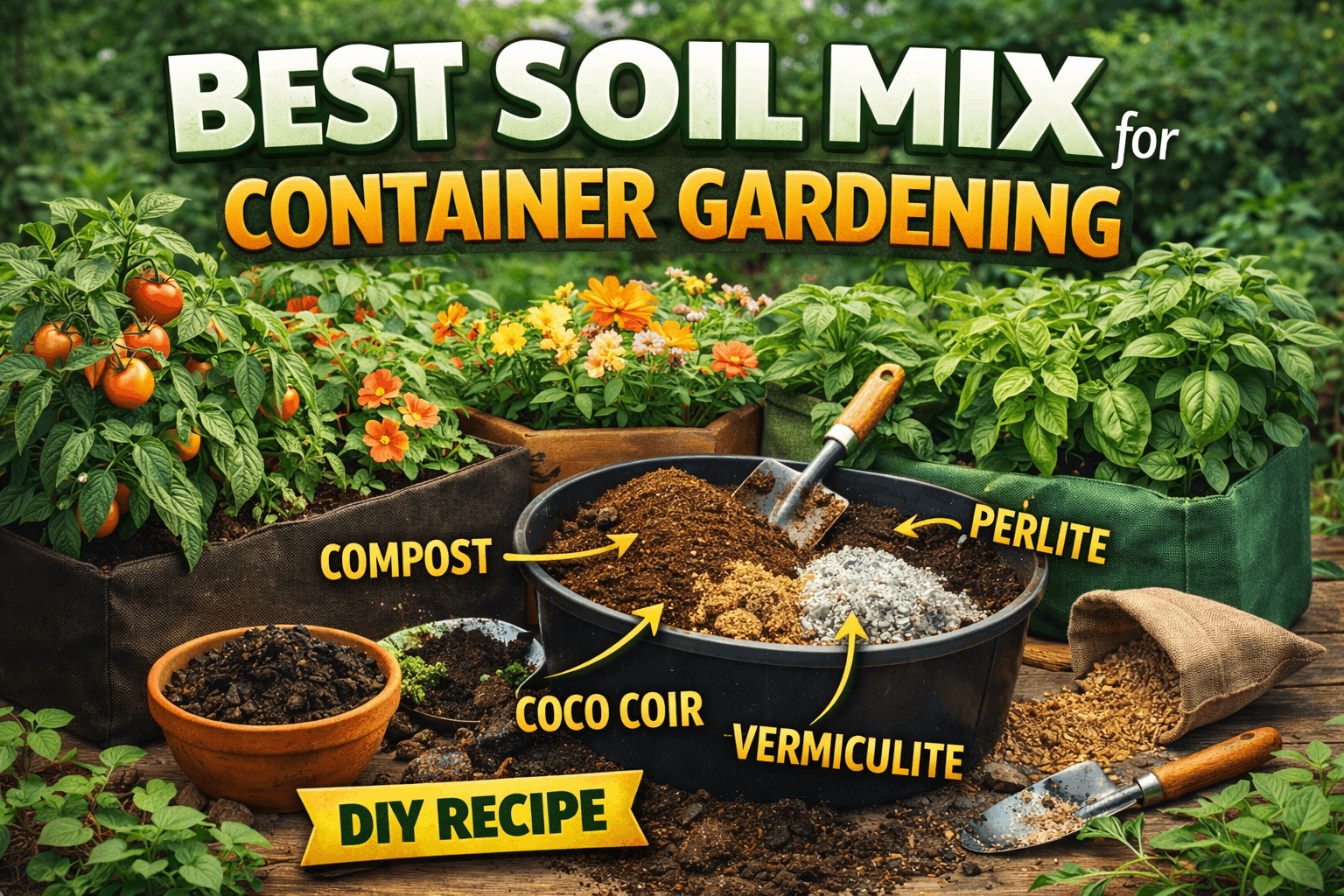
Container gardening has become one of the most popular gardening methods in the United States—and for good reason. Whether you have a small balcony, rooftop, patio, or backyard, growing plants in containers gives you flexibility, control, and convenience.
But here’s the truth most beginners don’t realize:
The success of your container garden depends more on your soil mix than anything else.
You can choose the best seeds, provide perfect sunlight, and water regularly—but if your soil mix is wrong, your plants will struggle.
In this complete guide, you’ll learn everything about creating the best DIY soil mix for container gardening, including ingredients, recipes, mistakes to avoid, and expert tips.
🌱 Why Soil Mix Matters in Container Gardening
Unlike ground soil, container soil behaves differently.
Key Differences Between Garden Soil and Container Soil:
| Garden Soil | Container Soil |
|---|---|
| Dense and heavy | Light and airy |
| Poor drainage | Excellent drainage |
| Can compact easily | Stays loose |
| May contain pests | Usually sterile |
Why You Should Never Use Garden Soil in Pots
Many beginners make this mistake.
👉 Problems with garden soil in containers:
- Poor drainage
- Soil compaction
- Root suffocation
- Pest and disease issues
🧪 What Makes a Perfect Container Soil Mix?
A good potting mix should have these 4 qualities:
1. Good Drainage
Water should flow out easily to prevent root rot.
2. Moisture Retention
Soil should hold enough water for plant roots.
3. Aeration
Roots need oxygen to grow properly.
4. Nutrient Availability
Plants need essential nutrients to thrive.
🧱 Core Ingredients of a Perfect Soil Mix
Let’s break down the most important ingredients used in DIY potting soil.
1. Coco Coir (Coconut Fiber)
✔ Benefits:
- Excellent water retention
- Lightweight
- Eco-friendly alternative to peat moss
👉 Best base ingredient for your mix.
2. Compost (Organic Matter)
✔ Benefits:
- Provides nutrients
- Improves soil structure
- Supports beneficial microbes
👉 You can use:
- Kitchen compost
- Vermicompost
- Leaf compost
3. Perlite
✔ Benefits:
- Improves drainage
- Keeps soil airy
- Prevents compaction
👉 Looks like small white stones.
4. Vermiculite
✔ Benefits:
- Holds moisture
- Improves nutrient retention
👉 Works great for seed starting.
5. Sand (Optional)
✔ Benefits:
- Improves drainage
👉 Use coarse sand, not fine sand.
6. Garden Soil (Limited Use)
If you must use it:
- Use only 10–20%
- Sterilize before use
🧾 Best DIY Soil Mix Recipe (Universal Mix)
Here’s the perfect all-purpose container soil mix:
🌿 Standard Recipe:
- 40% Coco coir
- 30% Compost
- 20% Perlite
- 10% Vermiculite
👉 Mix thoroughly before use.
🌼 Soil Mix Recipes for Different Plants
Different plants need different soil mixes.
🥬 1. Vegetables (Tomato, Chili, Spinach)
Recipe:
- 40% Coco coir
- 30% Compost
- 20% Perlite
- 10% Garden soil
👉 Nutrient-rich mix for better yield.
🌸 2. Flowering Plants
Recipe:
- 40% Coco coir
- 25% Compost
- 25% Perlite
- 10% Vermiculite
👉 Helps blooming and root growth.
🌵 3. Succulents & Cactus
Recipe:
- 30% Coco coir
- 20% Compost
- 40% Sand
- 10% Perlite
👉 Fast-draining mix is essential.
🌿 4. Herbs (Basil, Mint, Coriander)
Recipe:
- 40% Coco coir
- 30% Compost
- 20% Perlite
- 10% Vermiculite
👉 Light and well-draining.
🧼 How to Sterilize Soil (Very Important)
Sterilizing prevents pests and diseases.
Methods:
🔥 Oven Method:
- Heat soil at 80–90°C for 30 minutes
☀️ Sun Method:
- Spread soil under sunlight for 2–3 days
💧 How to Maintain Soil Health
Your job doesn’t end after preparing soil.
✔ Add compost every 15–20 days
✔ Avoid overwatering
✔ Loosen soil regularly
✔ Replace soil every season
⚠️ Common Mistakes to Avoid
❌ Using Heavy Soil
Leads to poor drainage.
❌ Skipping Perlite
Results in compact soil.
❌ Overloading Compost
Too much nutrients can harm plants.
❌ Not Mixing Properly
Uneven growth.
🧠 Advanced Tips for Better Results
🌟 Add Organic Fertilizers:
- Bone meal
- Neem cake
- Mustard cake
🌟 Use Mulch:
- Retains moisture
- Reduces weeds
🌟 Check pH Level:
Most plants prefer pH 6.0–7.0
🪴 How to Fill Pots Properly
Step-by-Step:
- Add stones at bottom (for drainage)
- Fill with soil mix
- Leave 1–2 inches space at top
- Water lightly
🌍 Best Soil Mix for USA Climate Zones
❄️ Cold Zones:
- Add more compost for warmth
🌞 Hot Zones:
- Add more coco coir for moisture retention
💡 DIY vs Store-Bought Soil Mix
| DIY Mix | Store-Bought |
|---|---|
| Cost-effective | Expensive |
| Customizable | Fixed formula |
| Organic control | May contain chemicals |
📈 Benefits of Using Proper Soil Mix
- Faster plant growth
- Higher yield
- Strong roots
- Less disease
- Better water control
🌱 Final Thoughts
If you want a successful container garden, your soil mix is everything.
A well-balanced DIY mix will:
- Save money
- Improve plant health
- Increase productivity
Invest time in your soil, and your plants will reward you.
🔍 FAQs (SEO Boost Section)
Q1: Can I use normal soil for pots?
No, it compacts and harms plant growth.
Q2: How often should I change potting soil?
Every 1–2 seasons.
Q3: What is the cheapest soil mix?
Coco coir + compost is budget-friendly.
Q4: Is sand necessary?
Only for succulents and cactus.